

THE HIDDEN DOSE
Understanding antibiotic use in the American food supply.

Friends:
Picture yourself at a grocery store in Rhode Island or anywhere else in February 2026. As you look over the neatly arranged packages of chicken, beef, and pork, you might wonder what’s really behind the labels. Many people worry about antibiotics used in raising animals and what that means for health, the environment, and antibiotic resistance.
In this article we’ll take a look at how antibiotics are used in food sold in U.S. stores and restaurants, offering facts to help you make informed choices.
Antibiotic use in the U.S. food system starts on the farm, where most meat, poultry, and dairy come from large-scale operations. For years, farmers have given animals antibiotics, often the same ones used for people. These drugs are added to feed or water to treat sickness, prevent disease in crowded barns, and help animals grow faster. Think of antibiotics like weed-killer: they wipe out most bacteria, but the toughest ones survive and multiply. These resistant bacteria can spread from farms to people through food, water, and the environment, making infections harder to treat. The Centers for Disease Control and Prevention reports that at least 2.8 million Americans get antibiotic-resistant infections each year, leading to over 35,000 deaths. Much of this resistance stems from overuse in agriculture, which accounts for about 70% of the antibiotics sold in the U.S.
Fast-forward to today, and the landscape is shifting—but not always for the better. Recent data reveals a troubling uptick: In 2024, sales of medically important antibiotics for U.S. livestock surged by 16%, the largest annual increase since the FDA began tracking in 2011. This jump brought total sales to nearly 7.10 million kilograms, reversing years of modest declines. Swine production gobbled up 43% of these drugs, cattle 41%, turkeys 11%, and chickens just 4%—a sign that chicken producers have made more progress in cutting back. Why the rise? Experts point to factors such as disease outbreaks, larger herd sizes, and the lingering reliance on antibiotics for prevention rather than treatment. Globally, livestock antibiotic use is projected to climb 30% by 2040 under business-as-usual scenarios, with North America seeing minimal changes but still contributing to the problem.
Regulations have tried to limit antibiotic overuse. Since 2017, the Food and Drug Administration has banned antibiotics used solely for growth promotion and now requires veterinary approval for certain antibiotics. The U.S. Department of Agriculture makes sure all meat sold in the country is free of antibiotic residues, so there are no detectable levels in the food. But meat that tests negative for residues does not mean the animals were never given antibiotics or that resistance is not a risk. ‘No residues’ does not mean ‘no resistance.’ These rules only cover what remains in the meat, not the broader health risks from regular antibiotic use on farms. Some states, like California, have stricter rules, limiting preventive antibiotic use and making stores share their suppliers’ antibiotic policies. Still, enforcement is uneven, and U.S. usage rates are almost twice those in Europe.
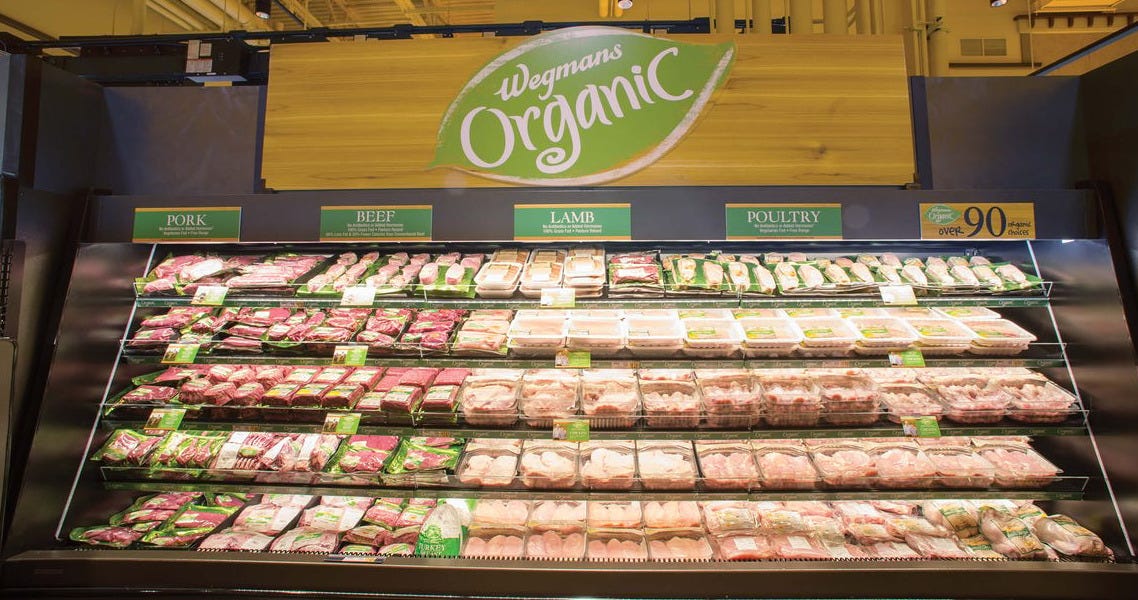
Grocery stores are where most people learn about antibiotics in food. Big chains like Walmart, Costco, and Kroger sell both regular and antibiotic-free meats. Labels such as “Raised Without Antibiotics” or “No Antibiotics Ever” mean the animals did not get antibiotics, except sometimes for eggs or chicks on their first day. USDA Organic has even stricter rules, banning almost all antibiotics, requiring third-party audits, requiring better animal care, and prohibiting synthetic pesticides. Brands like Applegate, Coleman Natural, and Perdue offer these products. To make sense of labels: “USDA Organic” and “No Antibiotics Ever” are the strictest, “Raised Without Antibiotics” is usually safe but may allow some early use, and “No Growth-Promoting Antibiotics” still allows routine preventive use, which can lead to resistance. Demand for antibiotic-free meat has grown a lot: sales rose 25% from 2009 to 2011, and organic meat sales hit $675 million in 2013 and keep growing. The 2026 “Where Food Comes From” certification uses outside audits to check label claims. Still, some labels like “No Growth-Promoting Antibiotics” may allow routine use, so resistance risks remain.
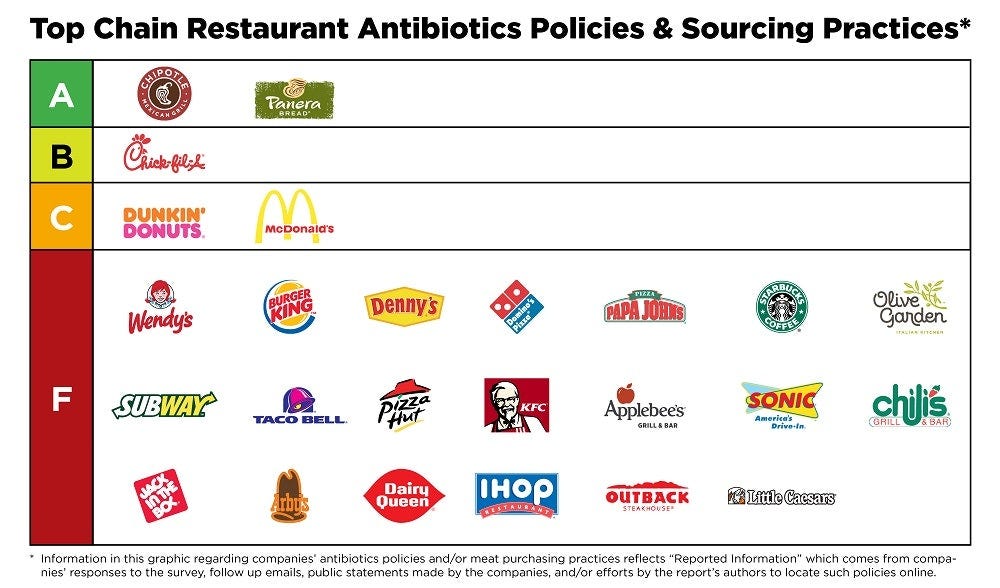
When eating out, restaurant progress on antibiotics is mixed. In a 2024 report grading 20 top chains, only Chipotle and KFC earned an A+ for strong limits on antibiotics in all meats, including a ban on the routine use of important antibiotics. Wendy’s and Chick-fil-A earned Bs, while McDonald’s, Starbucks, and Subway got Cs, mostly for chicken but not for other meats. Others, like Burger King, Domino’s, and Olive Garden, received Ds or Fs because they have weak or no public policies. Chicken is where most progress has happened: 15 chains have cut back on antibiotics, helped by companies like Tyson Foods stopping the use of human antibiotics in 2017. For beef and pork, where resistance is a bigger risk, most restaurants are behind. Some, like Panera and Chipotle, serve mostly antibiotic-free meat, showing it can be done.
As a consumer, knowledge is your superpower. Prioritize USDA Organic or verified “Raised Without Antibiotics” labels to minimize exposure to resistance drivers. Ask restaurants about their sourcing; many respond to demand. Support policies pushing for transparency, like San Francisco’s reporting ordinance. Reducing meat consumption or opting for plant-based alternatives can also lighten the load. Positive change is possible—after a wave of shopper petitions and surveys, Costco committed to expanding its antibiotic-free chicken lineup in 2025, a direct response to customer concerns. The tide is turning: With consumer pressure, companies like Perdue now raise two-thirds of their chickens without antibiotics, and projections show potential for 57% global cuts through better farming practices. But without vigilance, that 16 percent spike could become the norm. Next time you’re at the store or table, remember: Your choices shape the story of our food and our future health.
(References Updated as of February 2026 data):
FDA 2024 antimicrobial sales data (16% increase in medically important antibiotics for livestock, total ~7.10 million kg; swine 43%, cattle 41%, turkeys 11%, chickens 4%): FDA. 2024 Summary Report on Antimicrobials Sold or Distributed for Use in Food-Producing Animals. https://www.fda.gov/animal-veterinary/antimicrobial-resistance/2024-summary-report-antimicrobials-sold-or-distributed-use-food-producing-animals (released Dec 2025).
CDC estimate of antibiotic-resistant infections (at least 2.8 million cases/year, >35,000 deaths): CDC. Antimicrobial Resistance Facts & Stats. https://www.cdc.gov/antimicrobial-resistance/data-research/facts-stats/index.html.
Livestock share of medically important antibiotics (~70% of U.S. sales historically; current data aligns with high use): FDA reports (as above); cross-referenced in analyses from EWG, CIDRAP, and Civil Eats (2025–2026).
FDA regulations (growth promotion ban since 2017, veterinary oversight required, no residues in meat): FDA Center for Veterinary Medicine updates and ADUFA guidelines.
Restaurant antibiotics policies/grades (e.g., Chipotle and KFC A+; most chains lag on beef/pork; chicken progresses better): Food Animal Concerns Trust (FACT). Serving Up Superbugs report (Nov 2025). https://www.foodanimalconcernstrust.org/s/SERVING-UP-SUPERBUGS.pdf. (Builds on prior Chain Reaction scorecards by NRDC, Friends of the Earth, etc.)
Labels and certifications (" Raised Without Antibiotics,” “No Antibiotics Ever,” USDA Organic): USDA standards and third-party verifications (e.g., Where Food Comes From certification).
