
THE EASTER TABLE
A Feast Across Catholic Nations.

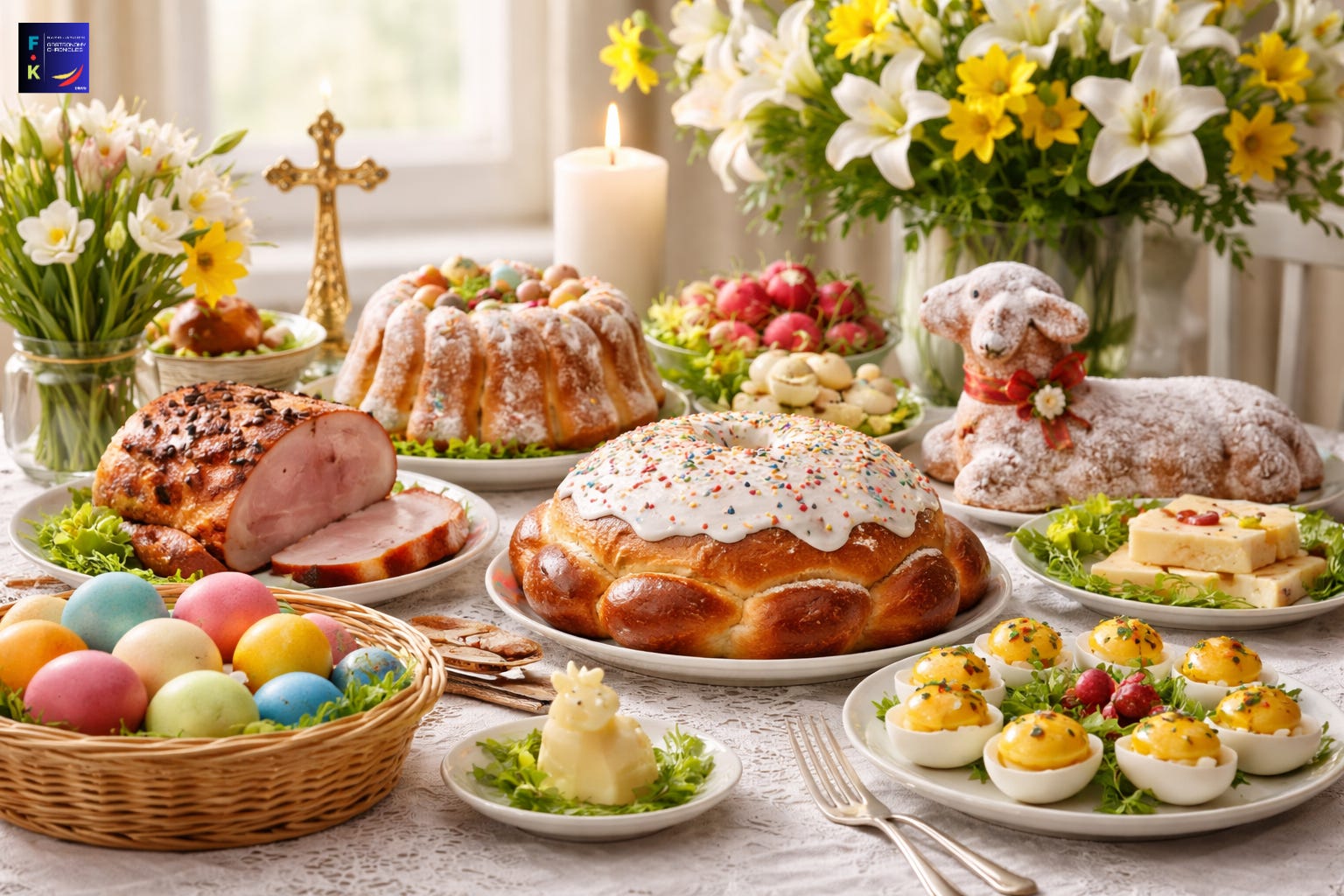
[Walter M.E. Potenza] Friends:
Every year, as winter fades and the first flowers appear, nearly a billion Catholics around the world prepare to celebrate Easter, the most sacred feast on their calendars. (Worldwide Catholic Population Hits 1.4 Billion, 2025) While the spiritual meaning of the holiday is the same everywhere—the resurrection of Christ and the victory of light over darkness—the food on the table looks very different from country to country. From Poland’s chilly hills to the sunny shores of the Philippines, Easter food reveals a culture’s history, landscape, joy, and sense of sacrifice.
Let’s take a look at 10 countries and the special dish that defines Easter in each. Get ready to feel hungry.
1. Italy — Colomba di Pasqua
The Dove That Tastes Like Spring
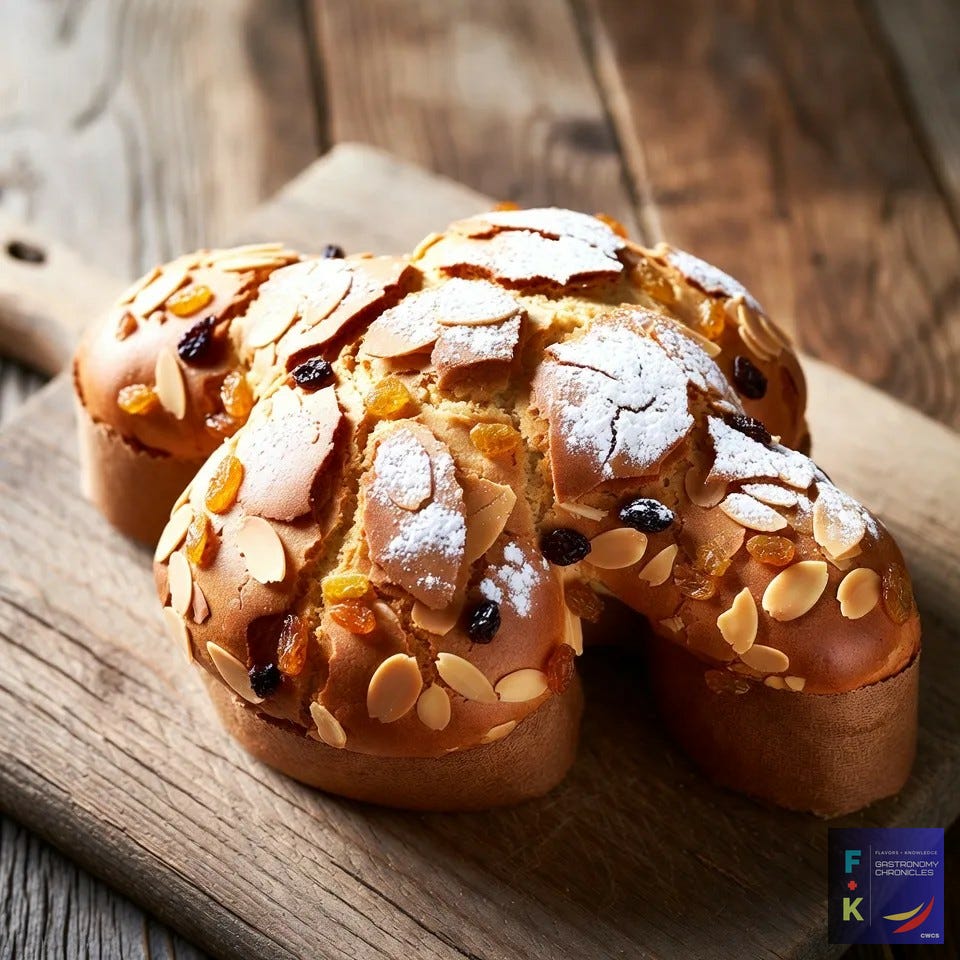
If Italy had an official Easter bird, it would be made of butter, eggs, and candied orange peel. Colomba di Pasqua, which means “Easter dove,” is a sweet, leavened bread shaped like a dove. It’s topped with pearl sugar and whole almonds, and finished with a shiny glaze that cracks when you press it.
Colomba is made from a slow-rising dough enriched with butter and eggs (a process that can take up to 24 hours to ferment. It’s related to Christmas panettone, but it’s lighter, more citrusy, and has a delicate crumb that almost melts in your mouth. The dove shape is intentional; it stands for peace, hope, and the Holy Spirit, turning a symbol into something delicious. (The Sweet Story of the Colomba di Pasqua: Italy’s Easter Delight, 2025)A bakery worth its salt produces its own version in the weeks leading up to Easter. Artisan versions are prized above all, with the finest coming from Lombardy. (Colomba Pasquale, 2024) Families tear them apart at the breakfast table on Easter Sunday, washing slices down with a glass of cold Prosecco or warm espresso. It is one of those rare foods that manages to be both festive and gentle — celebratory (Easter breakfast in Italy: the traditional recipes, 2023) — without overwhelming the senses.
2. Poland — Żurek Wielkanocny
The Sour Soup That Wakes the Dead
In Poland, Easter Sunday begins not with something sweet, but with something boldly sour. Żurek wielkanocny is a fermented rye soup that’s thick, tangy, and deeply savory. For centuries, it has warmed Polish homes after the long Lenten fast. The name comes from žur, the fermented rye starter at the heart of the broth. (Żurek: Poland’s Beloved Sour Rye Soup, 2023) Tasting it helps explain why Eastern European food is often misunderstood by those who haven’t tried it, with sour rye flour that has been left to ferment for several days. Into this pale, opaque broth go chunks of white sausage (biała kiełbasa), quartered hard-boiled eggs, horseradish, garlic, marjoram, and sometimes potatoes. The result is a bowlful of contradictions: acidic yet comforting, humble yet deeply complex, ancient yet alive. In many families, it is served inside a hollowed-out loaf of sourdough bread, which slowly absorbs the broth and becomes edible by the end of the meal. (Żurek: Poland’s Beloved Sour Rye Soup, 2026)
The tradition of blessing Easter food, called święconka, means Żurek is often brought to church in a basket the day before Easter. A priest blesses it along with bread, eggs, and ham, and families eat it the next morning. (Święconka, 2024) It’s touching to see such a simple soup treated as something sacred.
3. Spain — Torrijas
The Spanish Answer to French Toast (And It Wins)
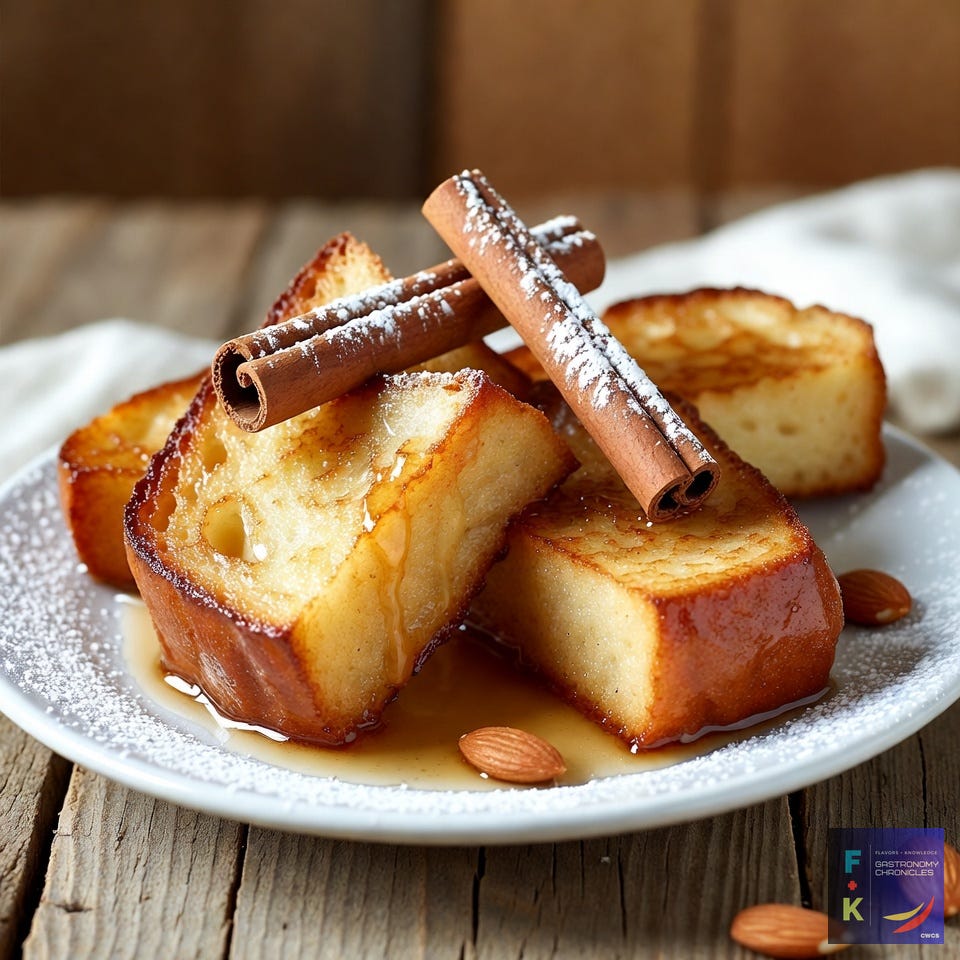
Across Spain during Semana Santa — Holy Week — a simple but magnificent street food fills the air with the smell of cinnamon and warm milk. Torrijas are thick slices of day-old bread soaked in sweet, spiced milk or wine, dipped in egg, fried until golden, and topped with cinnamon sugar or honey. Technically, they’re Spanish French toast, but that description doesn’t do them justice—just as calling the Alhambra a nice building falls short. (Torrijas Are Spanish ‘French’ Toast—With a Few Tantalizing Twists, 2021)books as a way to use up stale bread during periods of religious abstinence. Pork was forbidden, but bread, eggs, and dairy were fair game — and Spanish cooks made something extraordinary from what remained. The key is the soaking: torrijas are left to absorb their bath of warm milk (often infused with lemon zest, vanilla, and cinnamon) until they are saturated to the core, then fried in abundant olive oil until the outside is lacquered and slightly crisp while the inside trembles like custard.
“Every pasteleria in Madrid produces them by the tray during Holy Week. The queues begin before sunrise.”
They are eaten warm, at room temperature, or at midnight. They aPeople eat them warm, at room temperature, or even at midnight. They’re enjoyed with coffee, wine, or just on their own. Torrijas are one of the most comforting foods ever created.
4. Philippines — Morcon
In the Philippines, Easter Sunday is one of the most anticipated meals of the year. In many households, the centerpiece of the table is morcon: a magnificent beef roll stuffed with hard-boiled eggs, Vienna sausages, gherkins, strips of carrot, and slices of chorizo de Bilbao, then braised for hours in a sauce of tomatoes, soy sauce, and bay leaves until the beef is tender enough to cut with a spoon.
Morcon is a dish shaped by Spanish colonial influence—the name comes from the Spanish word morcilla, meaning “blood sausage”—but Filipino cooks have made it their own over the past four centuries. (Morcón (Filipino cuisine), 2024) Preparation starts the night before: the beef is pounded flat, marinated, rolled around its colorful filling, tied with twine, and seared until brown, then braised slowly for a long time.
When sliced and arranged on a platter, morcon shows off layers of beef wrapped around a colorful mix of ingredients. It’s served over rice, with the braising liquid turned into a rich, savory sauce. Making morcon takes most of a day, but that’s the point. In Filipino culture, food that takes time is a way to show love.
5. Brazil — Bacalhau à Gomes de Sá
The Salted Cod That Crossed the Atlantic
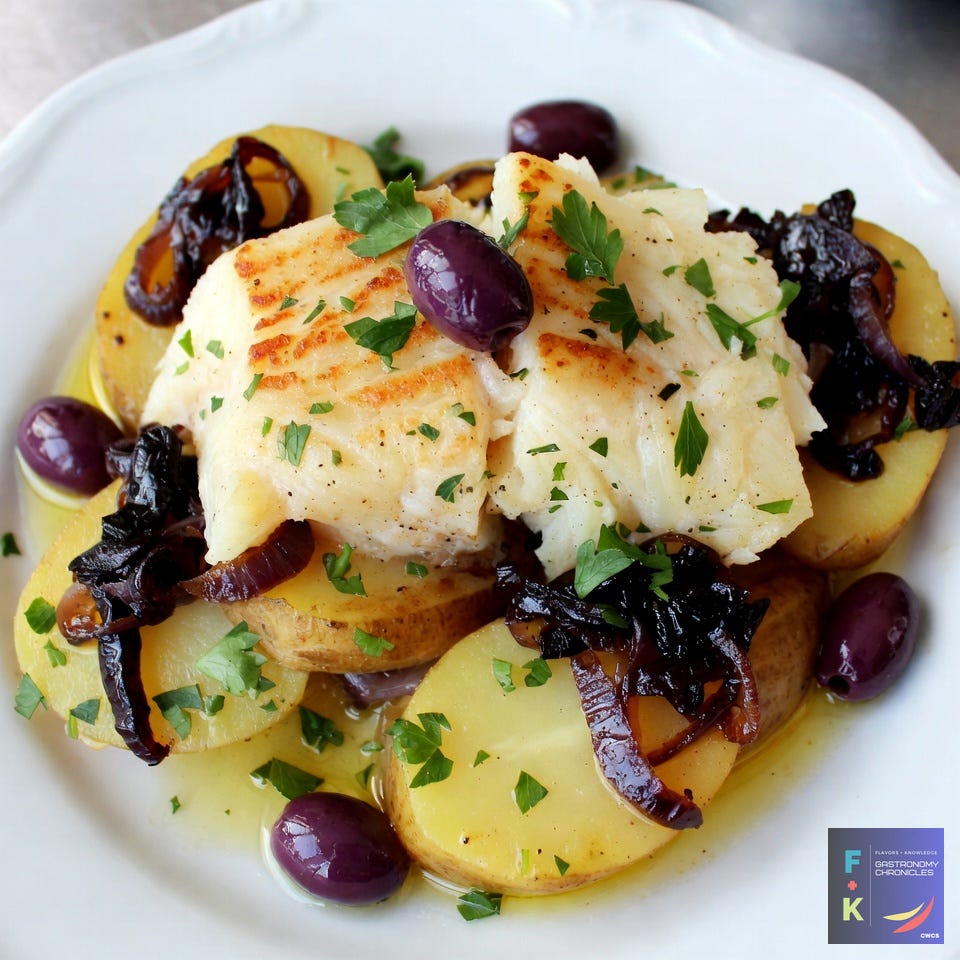
In Brazil, Easter is all about bacalhau, or salted, dried codfish. Portuguese colonizers brought it to Brazil in the 16th century, and it’s now the main Easter dish, prepared in many ways. The most beloved version is Bacalhau à Gomes de Sá, named after a 19th-century Portuguese merchant said to have created it. (Bacalhau à Gomes de Sá, 2024)
This dish takes patience. The bacalhau is soaked in cold water for 24 to 48 hours, with the water changed often, until the fish loses its salt and becomes soft and flaky. The fish is then layered in a baking dish with sliced, par-boiled potatoes, thin rings of white onion, and plenty of good olive oil. It’s baked until the edges caramelize and the oil gathers around the fish. Black olives and hard-boiled egg halves are added on top, and it’s served with crusty bread to soak up the oil.
This dish has a sturdy quality that reflects centuries of seafaring and survival. It isn’t delicate or fancy. It’s honest, nourishing, and deeply satisfying, and it has made the journey from the cold North Atlantic to Brazil’s tropical climate without losing its essence.
6. México — Capirotada
The Bread Pudding That Carries Centuries of Symbolism
If you ask a Mexican about Easter, they’ll probably mention capirotada. This bread pudding is full of meaning and flavor, and people have discussed and loved it for centuries. It’s made from toasted bolillo bread soaked in a syrup of piloncillo, cinnamon, cloves, and tomatoes, then layered with cheese, peanuts, raisins, and sometimes coconut. Capirotada looks like a dessert, but tastes much older and more complex.
Capirotada is full of symbolism. The bread stands for the body of Christ. The piloncillo syrup, made from unrefined dark sugar, represents the blood. Cinnamon sticks are the wooden cross, and cloves are the nails. Even the cheese, which melts and stretches between the layers, is said to represent the Holy Shroud. (Capirotada, 2024) It might be the most symbolic bread pudding ever made.
“Every family has their own recipe, and every family believes theirs is the only correct one.”
Recipes for capirotada vary by region and by grandmother. Some are dry and dense, while others are moist and almost like custard. Some versions add plantains, pecans, or guava paste. The one thing they all share is the piloncillo syrup, cooked with canela and whole spices until it’s dark, fragrant, and thick enough to coat a spoon.
7. Portugal — Folar da Páscoa
The Bread That Seals the Family Together
In Portugal, Easter bread is more than just food—it’s a gesture. Folar da Páscoa is a sweet, rich bread baked with whole eggs on top, their shells shining through the golden crust. It’s traditionally given as a gift from godparents to godchildren, from elders to the young, and from the village to family members who come home for the holiday. Receiving a folar means you’re remembered. Baking one is a way to show love. (May, 2011)
The bread is made from dough enriched with butter, eggs, sugar, and lard. It’s simpler than Italian or French enriched breads, but very satisfying. Depending on the region, it’s flavored with anise or lemon zest, braided or shaped into a round, and baked until the crust is golden. The eggs on top cook in the oven with the bread, so their whites are set, and the yolks are creamy, with lightly browned shells. You peel and eat the eggs with the bread, letting the yolk blend into each soft, sweet bite.
In some regions, especially Trás-os-Montes in the north, there’s a savory version filled with smoked sausage and presunto ham. This bread is heartier and more rustic, reflecting a farming tradition rather than a sweet one. (Folar Transmontano (Traditional Portuguese Easter Bread), 2024) Both types are special.
8. France — Agneau Pascal
The Lamb of God, Roasted to Perfection
In France, Easter is all about lamb. It’s not just an option—it’s a tradition that goes back to the Passover roots of Christianity. Agneau pascal, or Easter lamb, is roasted on Easter Sunday in homes across the country, from Brittany to Provence. People debate how to prepare it with the same passion they have for wine and politics.
The most famous version comes from the salt marshes near Mont-Saint-Michel in Normandy, where a special breed called pré-salé, or salt meadow lamb, grazes on grass touched by sea spray and tides. These lambs take in minerals and salt from the marsh, so their meat is naturally delicate and flavorful. (Pré-salé lamb, Mont Saint-Michel, 2023) All it needs is a little thyme, garlic, butter, and a hot oven.
The leg is roasted until the outside is crisp and caramelized, while the inside stays slightly pink—a doneness the French call rosé, or rose-colored. It’s served with white beans cooked in lamb drippings, a glass of red Bordeaux, and the quiet pleasure of a tradition older than the Republic.
9. Argentina — Rosca de Pascua
The Ring Cake Filled With Cream and Good Fortune
Argentina is a country where Italian and Spanish immigration has left deep marks on the food culture. It is nowhere more evident than at Easter, when the bakeries fill up with roscas de Pascua: ring-shaped sweet breads or cakes decorated with cream, glacé cherries, and candied fruit, and — in the Argentine tradition — filled with pastry cream, dulce de leche, or both.
Rosca, which means “ring,” came to Argentina with European immigrants in the late 1800s and early 1900s. In Spain and Portugal, rosca is eaten at Epiphany, but in Argentina, the tradition shifted to Easter and took on a local twist. (Collections, 2011) Argentine roscas are bigger, sweeter, and filled more generously than their European versions, since Argentine cooks believe that more is always better—especially with dulce de leche.
The best roscas aren’t found in supermarkets, but in neighborhood panaderías—family-run bakeries where bakers start before dawn, and the smell of fresh bread fills the street by early morning. People buy them after Easter Sunday Mass and eat them at the family table, often sharing mate. Rosca is one of those foods that tastes best when shared.
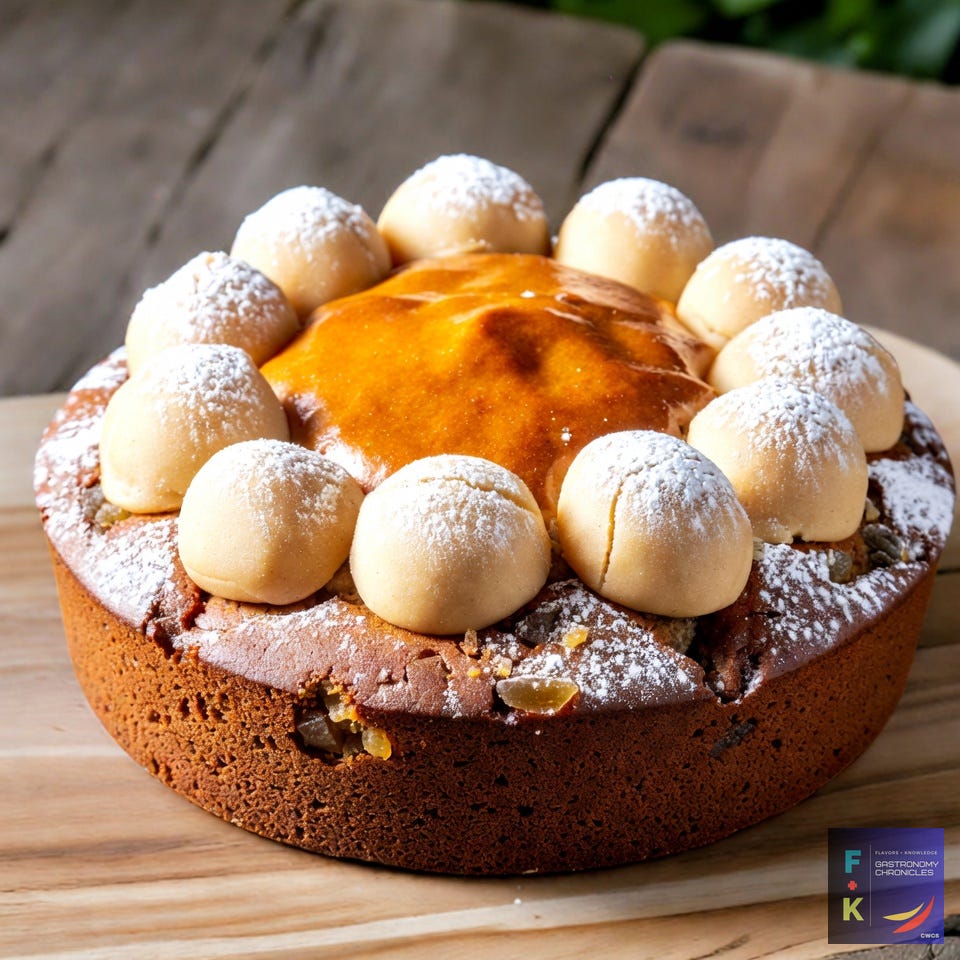
10. Ireland — Simnel Cake
The Fruitcake Crowned with the Apostles
Ireland’s Easter cake stands out among Catholic foods. It’s a dense, spiced fruitcake with a layer of marzipan in the middle, more marzipan on top, and eleven marzipan balls arranged in a circle to represent the eleven faithful apostles (Judas is left out). The cake is old, unusual, and wonderful.
Simnel cake dates back to before the Reformation, and its name might come from the Latin word simila, meaning fine white flour, though food historians still debate this. (Simnel cake, 2024) The fruitcake is made in the Irish style, packed with currants, raisins, mixed peel, and cherries, held together with eggs and butter, and flavored with cinnamon, nutmeg, and mixed spice. The double layer of marzipan—one inside and one on top—makes it richer and gives it a unique texture no other fruitcake has.
“The eleven marzipan balls are pressed gently onto the top, then toasted under the grill until they blister and brown slightly at the edges.”
Originally associated with Mothering Sunday (the fourth Sunday of Lent), simnel cake was first linked to that day, but over time it became an Easter tradition in Ireland. (Simnel cake, 2024) This cake isn’t subtle—it’s rich, sweet, and very satisfying, perfect for celebrating after forty days of Lent. After Lent, Ireland has earned every one of those eleven marzipan apostles. Single dish, but the fact that so many cultures have arrived at the same fundamental ideas through completely different paths: the breaking of a fast deserves celebration; the celebration should center around the family table; the food should be the best you can make. Whether it arrives as a dove-shaped brioche in Milan, a soured rye soup in Warsaw, or a ring cake in Buenos Aires, Easter food is always, at its core, an act of love.
The world is big, the table is long, and there’s always space for one more plate.