

Friends:
The Botanical Bonfire: Rethinking Summer Peppers Beyond “Vegetables”
Experiencing the crispness of a bell pepper or the intense heat of a habanero on a summer day reveals a botanical marvel. While grocers and cooks classify peppers as vegetables, botanists—and the plants themselves—define a summer pepper as a fruit: specifically, the mature, seed-bearing ovary of a flowering plant. More precisely, peppers are berries, akin to tomatoes or bananas, though they lack sweetness.
This botanical distinction clarifies why peppers reach their peak in summer. In contrast to root vegetables, which store energy, or leafy greens that prefer cooler conditions, peppers are tropical perennials requiring substantial heat and sunlight to complete their life cycle. Extended periods of warmth and light are essential for the transformation of flowers into fruit.
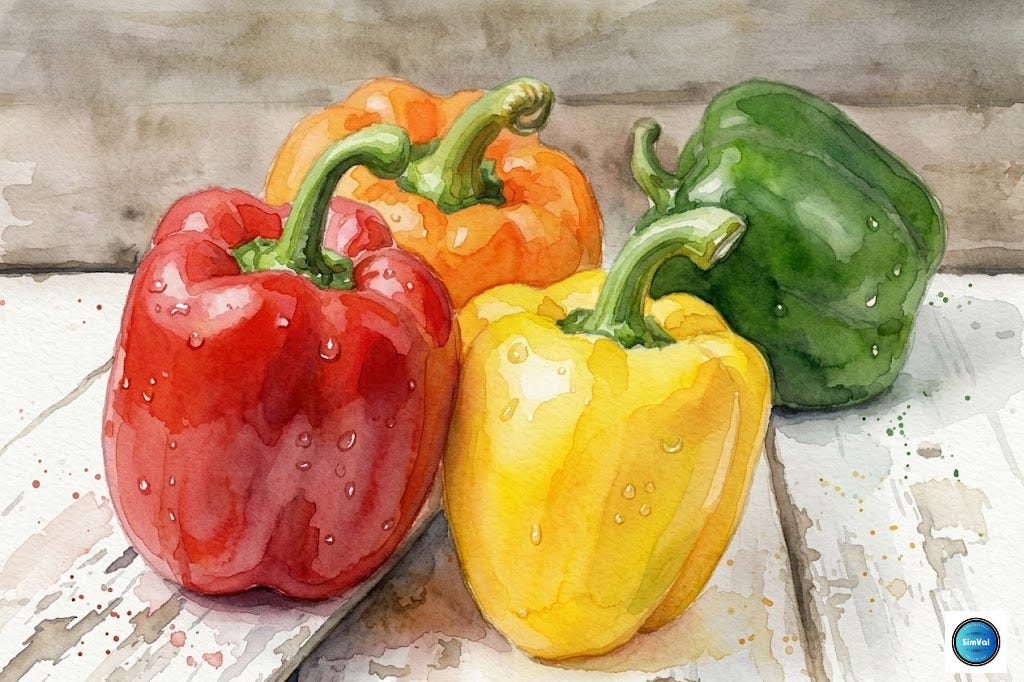
The influence of summer sunlight extends beyond growth, facilitating the full development of peppers. Initially, all peppers are green due to unripe chlorophyll. As the season advances and temperatures increase, the plant initiates a metabolic cascade. The green pigment diminishes as the fruit matures, revealing vivid yellows, oranges, or reds. This ripening process involves converting starches to natural sugars, enhancing sweetness, and softening cell walls, which contributes to the characteristic texture.
The characteristic heat of chile peppers is not a flavor but a botanical defense mechanism. This sensation is caused by capsaicinoids, which are synthesized in the fruit’s white, spongy placenta or pith. The evolutionary purpose is to deter mammals, whose chewing can damage seeds, from consuming the fruit. Capsaicin specifically targets mammalian pain receptors, whereas birds, which do not possess these receptors and disperse seeds intact, are unaffected.
Thus, selecting a glossy summer pepper at the market presents a botanical paradox: a sweet, crisp fruit that has evolved as a protective structure. It functions as a vessel for seed dispersal, a site of complex chemical processes, and a product of intense sunlight, all encapsulated within a thin, waxy skin that embodies the essence of summer.
1. Judge by Weight, Not size
When choosing a pepper, pick it up and see how it feels. A good pepper should feel heavy for its size, which means it has plenty of water and thick flesh and will be crisp and juicy. If it feels light or hollow, it is probably old or dried out inside.
2. The Skin Test
Check that the skin is tight, shiny, and smooth. If you see dullness, wrinkles, or soft spots, the pepper may be old or stored badly. The skin should feel firm and bounce back when you press it gently.
3. Check the Stem and Calyx
Look at the green cap and stem. They should be fresh, green, and bend easily. If the stem is brown, dry, or shriveled, the pepper is old. A bright stem means the pepper was picked recently.
4. Color is Flavor (Not Just Ripeness)
This is where many people get confused. Some green peppers are just unripe red, yellow, or orange peppers, and they get sweeter as they ripen and change color. But some types stay green even when fully ripe, so check the signs or ask about the variety if you want a certain flavor or sweetness.
Green Peppers: Picked early, they have a grassy, slightly bitter, and vegetal flavor. They are excellent for stuffing or sautéing.
Red, orange, and yellow peppers stay on the plant longer, so they are sweeter and fruitier. Choose ones with even color and no big green spots. Red peppers are great for salads, snacking, or roasting. Orange and yellow peppers taste good grilled, in stir-fries, or in salsas, where their bright color stands out.
5. The “Four-Lobe” Myth
Some people say bell peppers with four lobes are sweeter and better for eating raw, while three-lobed ones are better for cooking. There is some truth to this, since four-lobed peppers often have more seeds and thicker walls, but it is not a reliable rule. Instead, choose peppers that feel firm and heavy for their size, which is a much better sign of freshness and flavor than counting lobes.
6. For Hot Peppers (Chilies)
If you are buying jalapeños, serranos, or habaneros, look for tiny white stretch marks, called corking, on the skin. These thin, web-like lines show the pepper grew quickly and often mean it is hotter. For most hot peppers, smaller ones are usually spicier. Thick or shiny skin can mean a milder pepper, while thin, dull, or slightly wrinkled skin can mean more heat. If you are not sure how hot a pepper is, gently smell it; the hottest ones often have a strong, sharp smell. You can also ask the vendor for advice or a heat comparison to help you pick the right spice level for your recipes.
Storage Tip for Home
When you bring your peppers home, wait to wash them until you are ready to eat them. moisture can cause mold. Keep them dry in a perforated plastic bag in yourfridge'ss crisper drawer, and they will stay crisp for up to a week. If you do not have a perforated bag, use a paper bag or leave a plastic bag slightly open so extra moisture can escape.
This summer, take time to touch, look at, and smell your peppers, and trust your senses. The best ones have a fresh, grassy, sweet smell near the stem, and you will always pick flavorful peppers. (Walter)
Try my Peperonata Recipe for an appetizer
Check out Irena Macri’s Blog for some delicious recipes