

FUELING OLYMPIANS
.....with a mountain of pasta, and the delicious chaos of eating like an Olympian in Italy's Winter Games.

Friends:
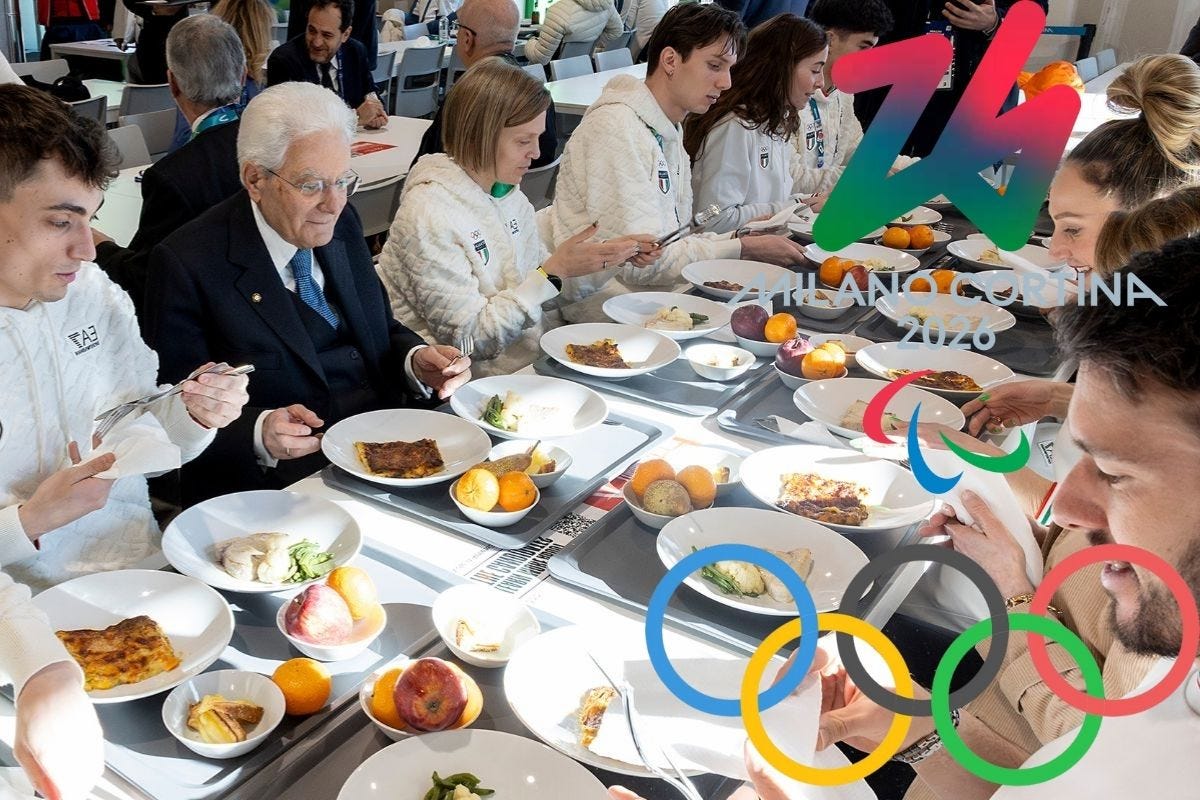
While here in Rhode Island we are buried under a pile of senseless snow, picture yourself walking into the Olympic Village in Milan or breathing in the fresh mountain air of Cortina d’Ampezzo during the Milano Cortina 2026 Winter Games. After a tough training session, you’re drawn to the dining hall, ready for a meal packed with carbs, protein, and plenty of Italian flavor. Unlike previous Olympic events like Sochi or PyeongChang, where food blandness left much to be desired, here the menu is so tasty that athletes are sharing pizza reviews on social media, acting like Michelin inspectors.
Since Pasta seems to be the preferred choice for the athletes, I am including a recipe for Pizzoccheri della Valtellina at the end of this reading.
In addition, I am writing this piece as I have cooked at four Winter Olympics myself, starting with Salt Lake City in 2002, and can tell you firsthand what really goes on in those hall kitchens. I vividly remember one busy evening in Salt Lake City when the Canadian ski team stood, eagerly facing a mountain of pappardelle pasta. With the power out due to a snowstorm, we hurriedly improvised under emergency lights, turning the situation into a spontaneous culinary adventure. The athletes gathered around, laughing and joking, as we created a makeshift assembly line, cutting Pasta with whatever tools were on hand. It was a moment of delicious chaos, blending the thrill of the games with the camaraderie that emerges over a shared plate of flour and eggs.
Those are the moments that make Cooking at the Olympics unforgettable.
Imagine something like up to 4,500 meals whipped up daily in the Milan hub alone, nearly 4,000 in Cortina, and another 2,300 in Predazzo. That’s a mountain of Pasta, with around 600 kilograms dished out each day. To put that into perspective, it’s enough to fuel approximately 1,200 downhill runs, underscoring the athletes’ immense calorie needs. (Pollina & Segreti, 2026) Athletes swarm the carb stations like kids at a candy store, loading plates with spaghetti, gnocchi, fettuccine, and lasagna. One American freestyler declared she’s had “the best pasta I’ve ever had here,” while others admit to smashing entire pizzas post-practice. South African cross-country skier Matt Smith is on a mission, rating a quattro formaggi pizza an impressive 8.5/10 (lasagna got a polite “good”), and even scored a custom South African flag pizza topped with herbs and cured meats.
Talk about personalized fueling! And for a sprinkle of quirky trivia, the most popular midnight snack among athletes is a surprising choice: Nutella-stuffed croissants, while the oddest request, hands down, was for spaghetti covered in chocolate sauce, proving their adventurous and unusual taste buds.
The Canadian women’s hockey team can’t get enough focaccia, and sometimes bread is more popular than Pasta. Their plates are loaded with Pasta in meat sauce, fresh mozzarella, burrata, Parmigiano, and grilled proteins like chicken, turkey, veal, beef, salmon, or white fish. There are also vegetables and fruit for balance, and one player joked, “They’re coming, OK?” But when you’re burning thousands of calories on the ice or in the snow, a little extra cheese is just part of the deal. That extra cheese provides quick glycogen replenishment and boosts calcium intake for bone health. This indulgence aligns with a periodized nutrition strategy, where cycles of load, perform, and recover are carefully planned to ensure optimal performance over time.
In the mountains of Cortina, the menu features hearty dishes from Dolomite traditions. There’s casunziei, beet-filled ravioli with butter and poppy seeds; polenta; buckwheat pizzoccheri; cured bresaola; and rich alpine cheeses like Bitto. These comforting foods provide lasting energy, perfect for athletes facing the cold. ‘My nonna served casunziei after every ski race,’ shares local chef Marco Rinaldi, anchoring the dishes in a living tradition. One Swedish skier, trying pizzoccheri for the first time, exclaimed, ‘It’s like a warm hug after a long day on the slopes.’ It’s like nature’s way of saying, ‘Hey, you’ve earned this warmth.’
Breakfast is far from boring. Athletes can choose eggs, yogurt, granola, and cereal, but some go straight for pizza or Pasta to get their carbs early. For dessert, there’s plenty of gelato, tempting tiramisu, and a molten chocolate tortino—like a lava cake—that’s even started debates about whether it’s better than Paris’s famous chocolate muffin. One speedskater raved about it on video, and chocolate fans everywhere agreed.
Now for the serious side of all this great food: nutrition experts have everything planned out. Timing and balance are key. Picture a 70 kg biathlete mindfully dividing 140 grams of protein throughout their meals, spooning lean meats and eggs to help muscles recover. To perform at their best in winter sports, athletes get 60-70% of their calories from carbs on intense training or race days. (Optimizing recovery strategies for winter athletes: insights for Milano-Cortina 2026 Olympic Games, 2024) Simple Pasta or rice before events helps with easy digestion and keeps energy stores full.
“I stick with two grams of protein per kilo, every time,” says a determined biathlete. (International Society of Sports Nutrition Position Stand: protein and exercise, 2017) Chefs often face momentous challenges, such as accommodating last-minute dietary requests or managing ingredient shortages in mountainous terrain, which adds a layer of complexity to meal planning. Fresh fruits, salads, and vegetables provide important micronutrients to help fight inflammation and support the immune system during cold weather. (Winter Nutrition Tips for Healthy Athletic Teams, 2026) Staying hydrated is also essential, since dehydration can happen quickly in the dry mountain air. (Rios, n.d.)
Humor aside, these athletes aren’t just eating; they’re strategically fueling machines that love Italian food. One day it’s strict pre-race plain Pasta; the next, it’s celebratory gelato after a medal run. Unlike the limited and uninspired offerings that plagued Paris’s dining hall, Milan Cortina’s menus are a testament to lessons learned. The villages prioritized variety, 24-hour access, vegetarian and international options, and religious observances, showcasing a culinary evolution that reflects cultural nods to 93 nations. (Pasta, Pizza Popular as Milan Cortina Addresses Paris Games Food Issues, 2026)
While medals are earned on the slopes, much of the excitement happens in the dining hall. Buon appetito, champions! May your plates be full, your energy high, and your pizza slices always crispy and foldable.
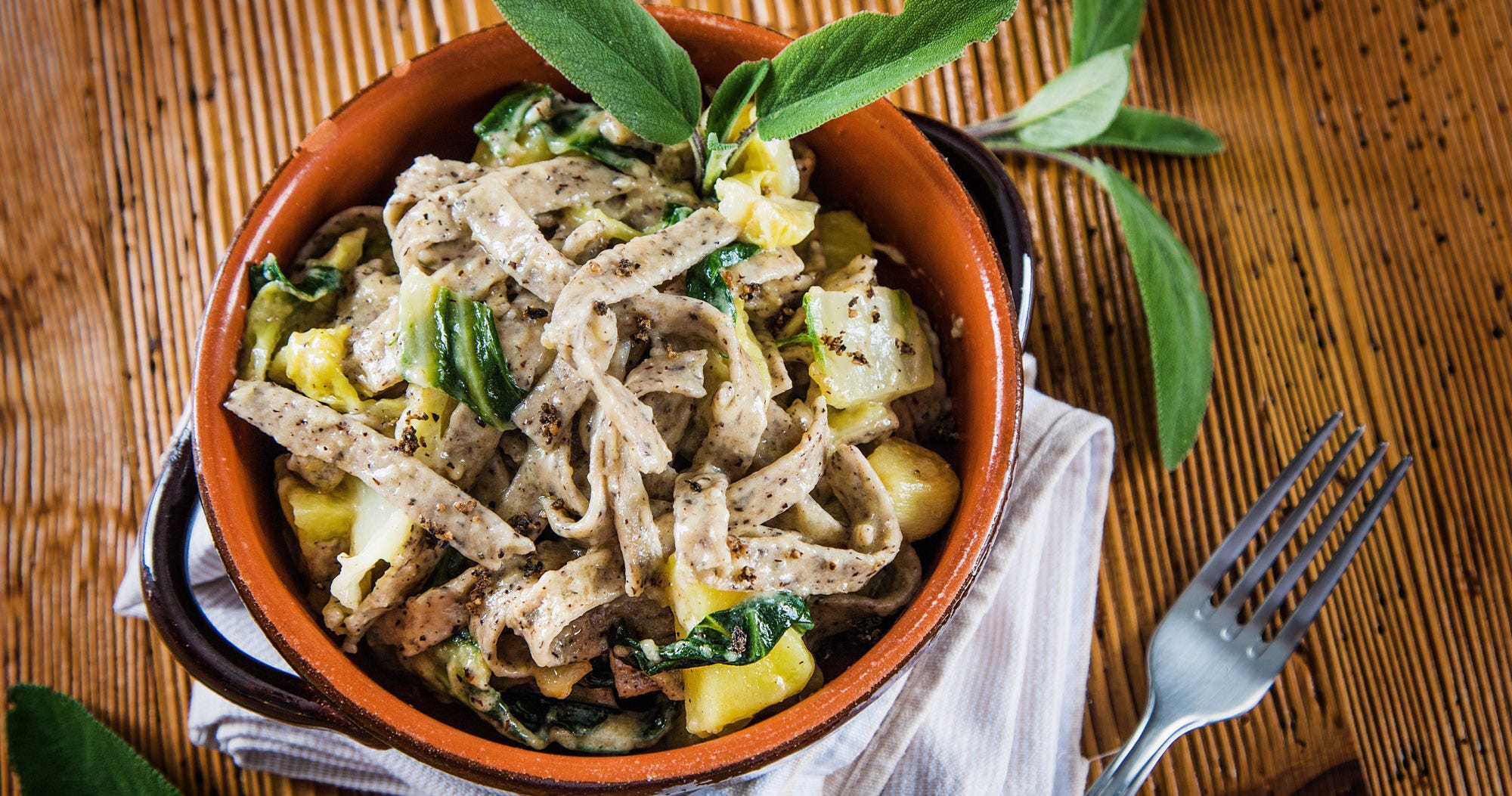
What is Pizzoccheri?
The Pasta: Pizzoccheri are short, flat ribbons of Pasta made primarily from buckwheat flour (grano saraceno), which gives them a distinctive nutty, earthy flavor and a greyish-brown color. They have a slightly coarse texture and are more robust than wheat pasta.
The Dish: The term “Pizzoccheri” also refers to the complete baked dish, which is a layered casserole of the cooked buckwheat pasta tossed with boiled potatoes and greens (traditionally Swiss chard or Savoy cabbage), all bound together with melted casera cheese (a local semi-soft cheese) and Bitto (a local aged cheese), and enriched with copious amounts of garlic and sage sautéed in butter.
It’s the ultimate winter comfort food—rich, savory, and deeply satisfying. The contrast of the creamy cheese, tender vegetables, and toothsome buckwheat pasta is extraordinary.
This recipe serves 4 as a main course. (Measurements Converter)
Ingredients:
For the Pasta (or substitute 300g dried store-bought pizzoccheri):
200g buckwheat flour
100g all-purpose (”00” or plain) flour
A pinch of salt
125ml lukewarm water
For the Casserole:
250g waxy potatoes (like Yukon Gold), peeled and cut into 2cm cubes
200g Savoy cabbage or Swiss chard, sliced into strips
150g Casera cheese (if unavailable, use Fontina Val d’Aosta), cubed
100g Bitto or Parmigiano-Reggiano, grated (Parmesan is a good substitute for Bitto)
150g unsalted butter
2-3 cloves garlic, lightly crushed
15-20 fresh sage leaves
Salt and black pepper to taste
Instructions:
1. Make the Pasta (skip if using dried): On a clean surface, mix the two flours and salt. Make a well in the center and gradually add the water, mixing with a fork until a dough forms. Knead for 5-7 minutes until smooth. It will be firmer than wheat dough. Wrap in cling film and let rest for 30 minutes. Roll the dough out thinly (about 2-3mm thick) on a floured surface. Cut into strips approximately 10cm long and 1cm wide. Let them dry slightly on a floured towel while you prepare the rest.
2. Cook the Vegetables and Pasta: Bring a large pot of well-salted water to a boil. Add the cubed potatoes and cook for 5 minutes. Add the sliced cabbage/chard to the same pot. After 3 more minutes, add the fresh (or dried) pizzoccheri Pasta. Cook everything together for another 3-4 minutes (slightly longer if using dried Pasta, according to package instructions) until the Pasta is al dente, and the vegetables are tender.
3. Prepare the Sage Butter: While the pasta cooks, melt the butter in a small saucepan over medium-low heat. Add the crushed garlic cloves and sage leaves. Cook gently until the butter is lightly golden and fragrant, and the sage is crisp. Remove from the heat and discard the garlic.
4. Assemble and Serve (The Traditional Way): Preheat your oven to 180°C (350°F) if you prefer a more baked, gratinéed version. Traditionally, it’s assembled hot and served immediately. In a large, deep serving bowl (or an ovenproof dish if baking), start layering: use a slotted spoon to add a portion of the drained pasta-potato-cabbage mix, then scatter a handful of cubed Casera/Fontina and grated Bitto/Parmesan over it. Season with pepper.
Repeat for another layer or two, finishing with cheese on top. Pour the hot sage butter (with the crispy sage leaves) evenly over the entire dish. Toss gently to combine slightly—the residual heat will melt the cheeses into a creamy sauce. To Bake (Optional): Place the assembled dish in the preheated oven for 5-10 minutes until the top is bubbly and golden. This is not strictly traditional but delicious.
5. Serve Immediately! Pizzoccheri must be eaten piping hot, right after combining. The cheese should be deliciously stringy, and the butter sauce unctuous.
Key Tips for Success: Do Not Overcook: The Pasta and vegetables should be tender but not mushy. The Butter is Key: Do not skimp on the sage butter. It’s the soul of the dish. Cheese Substitutes: The authentic cheeses are crucial for flavor, but if you can’t find them, a combination of Fontina (for meltability) and aged Parmesan (for sharpness) works well. Gruyère can also be a substitute for Casera.
Buckwheat Flour: Using 100% buckwheat flour makes the Pasta too fragile; mixing it with wheat flour is traditional and practical.
