
CACIO E PEPE (cooking class)
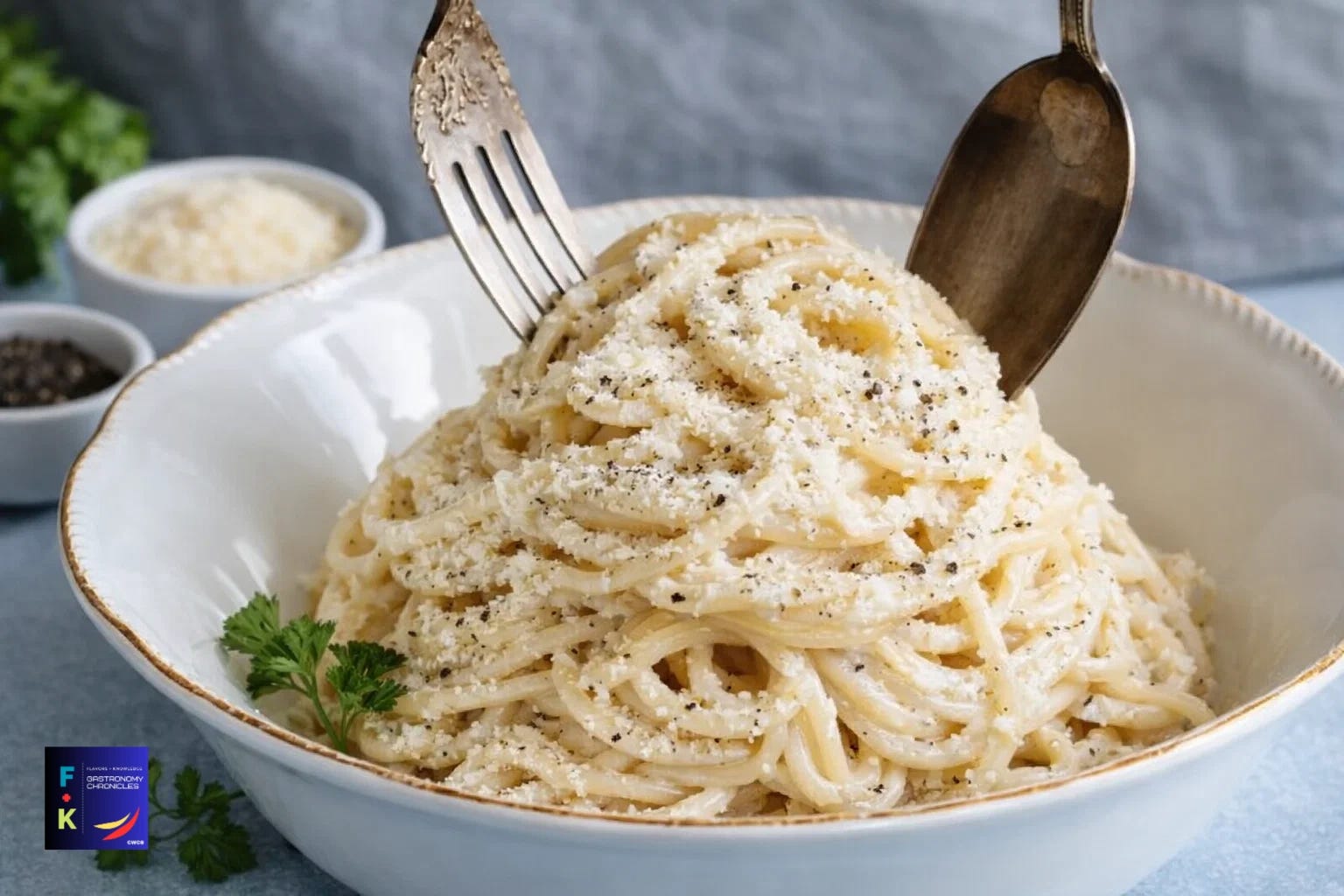
It's important to remember that the original recipe doesn't include any oil, butter, or cream to make the sauce creamy.

Friends:
Allison K., one of the supporting ACW readers from Bellevue, Washington, inquired about Cacio e Pepe Pasta. Here we go, Allison, I hope you have fun with this!
Join me in the kitchen, and let’s talk about this Roman sensation.
Cacio e pepe is an exceptional, authentic Roman pasta dish with a fascinating history dating back to ancient times. The dish symbolizes Rome, embodying the soul of a city devoted to grandeur and majesty while never forgetting its raucous neighborhoods. The dish thrives on controversy and interpretation, with many versions claiming to be the best in Rome.
The dish’s history dates back to the pastures where it was born during seasonal livestock movements. The shepherds of the Roman countryside carried high-calorie and long-lasting food, including pecorino cheese made from sheep’s milk, black peppercorns, and dried spaghetti. Black pepper is known to stimulate heat receptors, thereby helping shepherds withstand cold weather. Aged pecorino has a long shelf life, and pasta is a reliable source of carbohydrates and calories. These food items are vital for shepherds who need to sustain their energy levels while outdoors.
Over several years, this particular dish has gained popularity. It has been widely adopted across Lazio’s rural areas and in the mountainous regions of Abruzzo and Umbria. The dish in question has become a staple of the culinary repertoire in these regions and is now widely recognized and appreciated on the menus of many restaurants and eateries.
Its journey from humble origins to its present-day status as a highly respected and sought-after dish is a testament to its versatility and appeal, as well as to the skill and ingenuity of the chefs and cooks who have contributed to its evolution. It has transformed from a frugal meal to a typical dish served in Roman taverns. According to tradition, the tavern keepers served a “dry” cacao e pepe to stimulate business. The dish had to stick in the throat, so customers needed wine to wash the pasta. The more cacio e pepe they ate, the more wine they drank.
Over time, there have been myriad pairings of this sauce with various types of pasta. The sauce’s versatility has made it a suitable accompaniment to nearly all pasta varieties. However, the traditional recipe calls for spaghetti. Versions with rigatoni, tonnarelli, or even egg pasta are standard. However, some purists argue that tonnarelli (along with egg noodles) is too porous and absorbs too much sauce.
The secret of cacio e pepe lies in the ingredients and the chef’s skill in preparing it. A fundamental aspect of this typical dish of Roman cuisine is the mixing of ingredients to obtain the famous “cremina.” To achieve a smooth, creamy cacio e pepe sauce, add the appropriate amount of cooking water and pecorino cheese until you reach the desired consistency.
Some people believe the best way to achieve the perfect texture is to finish cooking the spaghetti in a pan, releasing the starch, and mixing it evenly with the sauce. It’s important to remember that the original recipe doesn’t include any oil, butter, or cream to make the sauce creamy. Therefore, it is crucial to use proper ingredients, dosage, and technique to prepare the dish perfectly.
Da Cesare, via del Casaletto 45. Tel. 06 536015. Cacio e Pepe can be served with dry or fresh pasta, which is a bonus. There are several good places in Rome, but Da Cesare remains my favorite!
Cacio e Pepe (Classic Recipe with dry pasta)
Ingredients for six servings
1 pound spaghetti di Gragnano
Two tablespoons of sea salt
Two tablespoons whole black peppercorns, or more to taste
1½ cups Pecorino Romano PDO, freshly grated, to taste
Bring a large pot of 6 quarts of water with 2 tablespoons of salt to a boil.
Grind the peppercorns very coarsely, preferably in a mortar and pestle or a spice grinder.
Warm a large serving bowl. Use some pasta water to heat the bowl, if you like.
Cook the spaghetti until al dente. Quickly lift it from the pot with tongs, let it drain instantly, then drop it into the warm bowl.
Immediately scatter a cup of the grated cheese and most of the ground pepper over the pasta, then toss to combine.
As you mix, sprinkle a spoonful of hot water from the cooking pot over the pasta and condiments to moisten and amalgamate them—add more pepper or cheese to taste.
Serve right away while the spaghetti is very hot.
